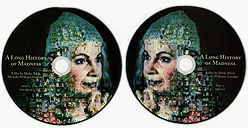
A Long History of Madness (2011)| Theoretical Fiction|120mins | Colour | Multi-lingual with Dutch, English, Finnish, French, Russian and Spanish subtitles
In 2011 we will be launching the version for the general public. This film will be called in English A Long History of Madness, in French Une longue histoire de folie, in Spanish Una larga historia de locura, in Dutch Moeder Zotheid, and in Finnish Hullu Aiti. For the Russian the title is Dolgaia istoria bezumia.
Una segunda oportunidad (2011) | 25mins | Colour | Finnish and French with Spanish subtitles
In January 2011, we will present the film Una segunda oportunidad (A Second Chance) in the Fundación José García Jiménez, Murcia, Spain, for the video exhibition La última frontera. Sissi was Françoise's first patient. Like Freud's Dora, Sissi interrupted her analysis prematurely. Later she continued with another analyst in Finland, her second chance. In the film we follow the treatment, while the new analyst reads from Françoise's case file on this patient, conjuring up images of Françoise reminiscing about Sissi. Imagining herself to be the Empress of Austria-Hungary, Sissi changes her fancy outfits with each session. Her gestures shift from regal to dejected, her moods from joyful to vulnerable and angry, sometimes within moments.
Mère Folle (2010) |130mins | Colour | Multi-lingual with English subtitles
In Autumn 2010 we started to screen films for a variety of audiences. In the Festival Madness & Arts we premiered the film cut for this context, titled Mère Folle. The international festival combined different arts and problematics of madness. After this beginning, we showed versions of this film to audiences in mental health institutions, in academic environments, and in art settings, such as the Stedelijk Museum in Amsterdam, and the Guggenheim Bilbao Museum. These screenings were followed by panel discussions or Q&A sessions.
Enjoy the exclusive offers on Moulin Rouge! The Musical Discount Tickets which are available on a first-come, first-served basis.
Single Game Ticket Pricing https://www.cooperstownbat.com/wp-content/uploads/2017/11/chicago-cubs-tickets.html don't miss some action at Wrigley Field this season.
Drawing, Painting, Art Portfolio. Small Groups - join our Art Classes for Kids in Oakville
View schedule and buy tickets for Hamilton Nyc Shows https://lunchticket.org/hamilton-tickets-nyc/